
Silicone for mold casting AS40
Tax included.

Everything you need for your epoxy project
Thousands of satisfied customers
Fast delivery
(1-3 days)
Solid quality you can rely on
Type - Molding silicone
Mixing ratio - 100:10
Casting thickness -
Curing time - Approx. 24 hours (at 20°C)
Pigment type -
Effect -
Area of use - Molding and mold production
Material -
Colors -
We ship almost all orders the same business day if you order before 2:00 PM.
Standard delivery time: 1–3 business days with Bring.
Customers in Northern Norway may experience an extra day or two in some cases.
Tracking:
You will receive a tracking number via email as soon as the package has been shipped.
100% satisfaction guarantee:
We are completely confident that you will be satisfied. We are so confident that we offer both full returns and coverage of return shipping. No matter what. It is therefore completely risk-free for you to order now to inspect the product yourself in your own home and at your own pace.
We also stock spare parts and wear parts, so if you are unfortunate enough to break something or, against all odds, manage to wear out the sharpening stones, they can be easily replaced.
Easy returns:
Contact our customer service, and we will send you a pre-filled return label.
No questions asked – no risk
The following section applies generally to all types of epoxy, not just this one. It applies regardless of what other sellers say. Many suppliers underrepresent the dangers of incorrect product use. Always familiarize yourself with the safety data sheet of the product you are going to use. All epoxy is inherently hazardous to health in liquid form, but can be used safely if you follow the recommendations in the safety data sheet. For some simple precautions, remember Storbua's epoxy safety rules:
- Work in a ventilated room where the air is changed often or that has exhaust ventilation, and where any spills can be controlled and unauthorized persons cannot come into contact with the product or residues of the product.
- If the work area is not sufficiently ventilated, use a mask with an organic filter to stay safe.
- Protect all parts of the body from contact with resin and hardener (skin, hair, eyes, etc.).
- After work is completed, wash the affected surfaces, including the cured product. Feel free to use acetone or alcohol to remove any uncured epoxy. Wet wipes can also be useful for wiping surfaces.
- Always use a mask when sanding and performing other processing.
If you follow these 5 rules, most of the work is done, and you can use most epoxy systems in a safe manner! However, this does not exempt you from reading the safety data sheet. Happy casting!
Read more about safe use of epoxy and how to read safety data sheets here
Technical infoSafety data sheet: Resin | Fast | SlowSee this reference card to have useful information about CCR easily accessible.
Description:
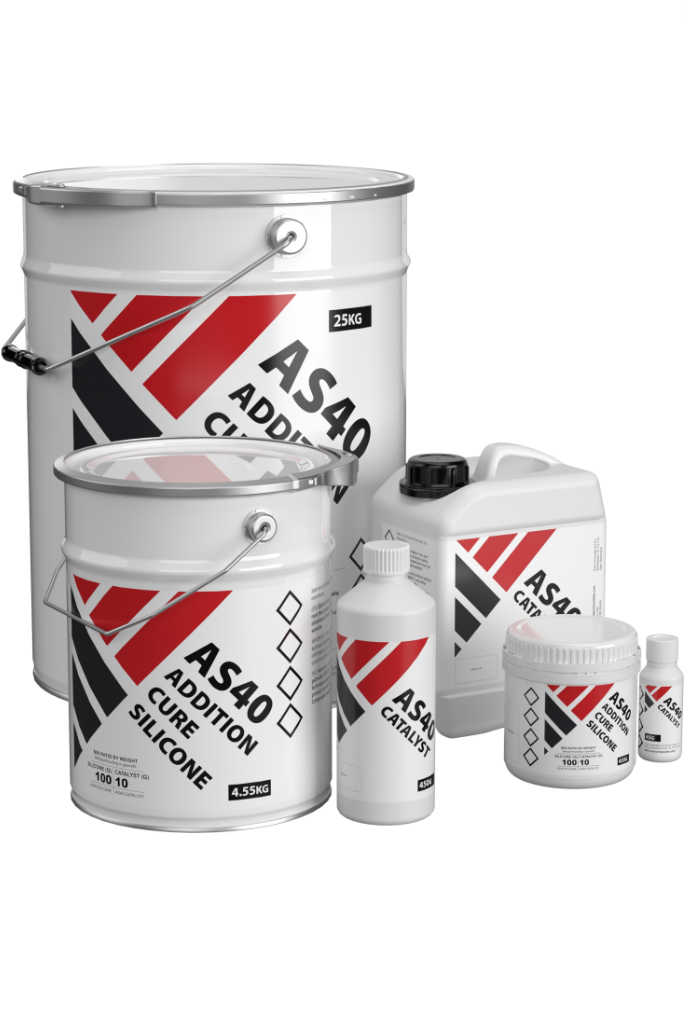
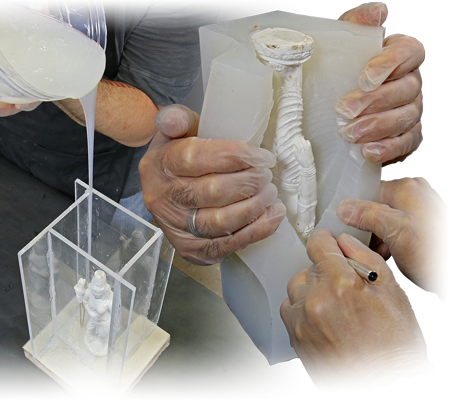
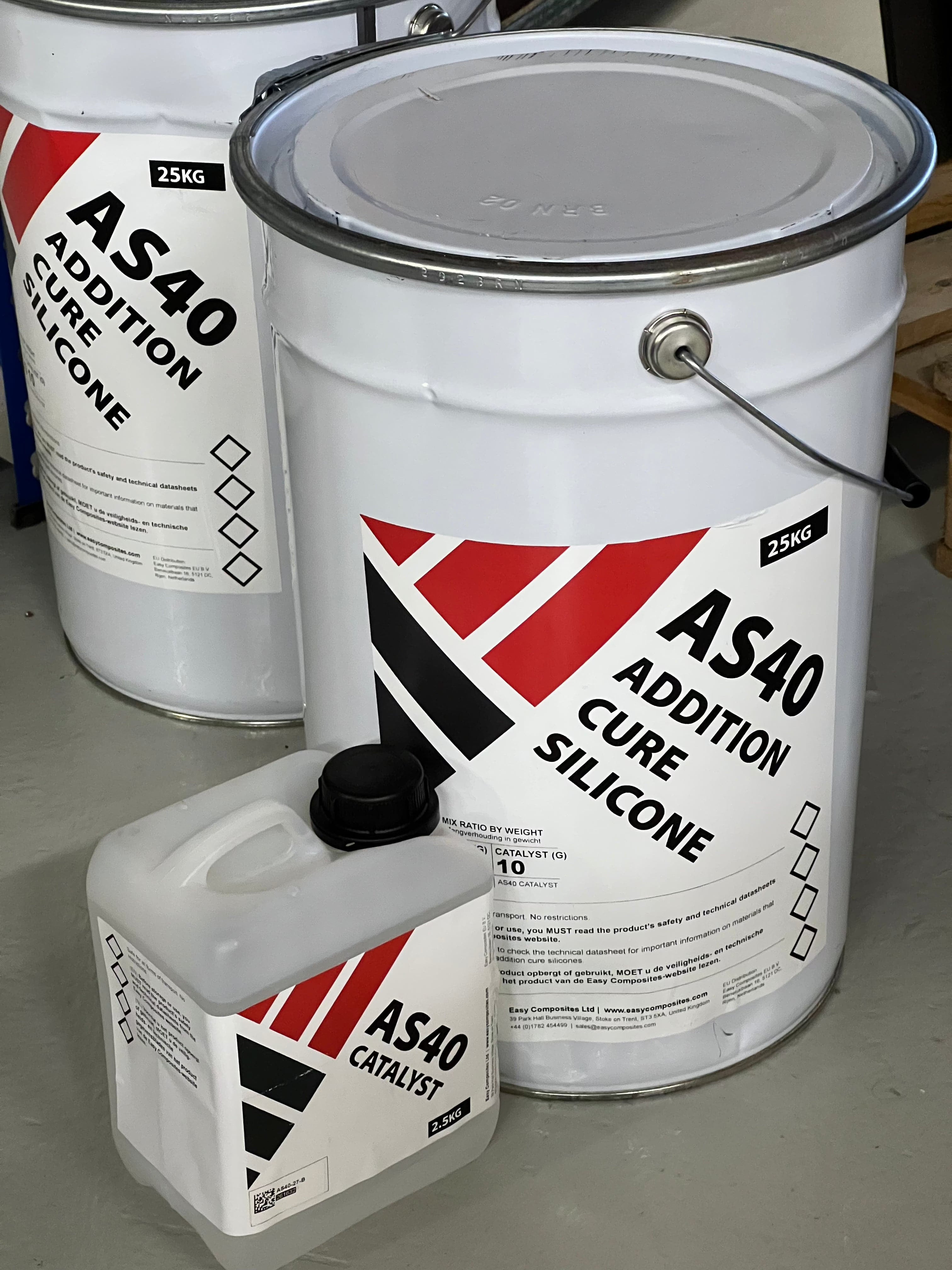
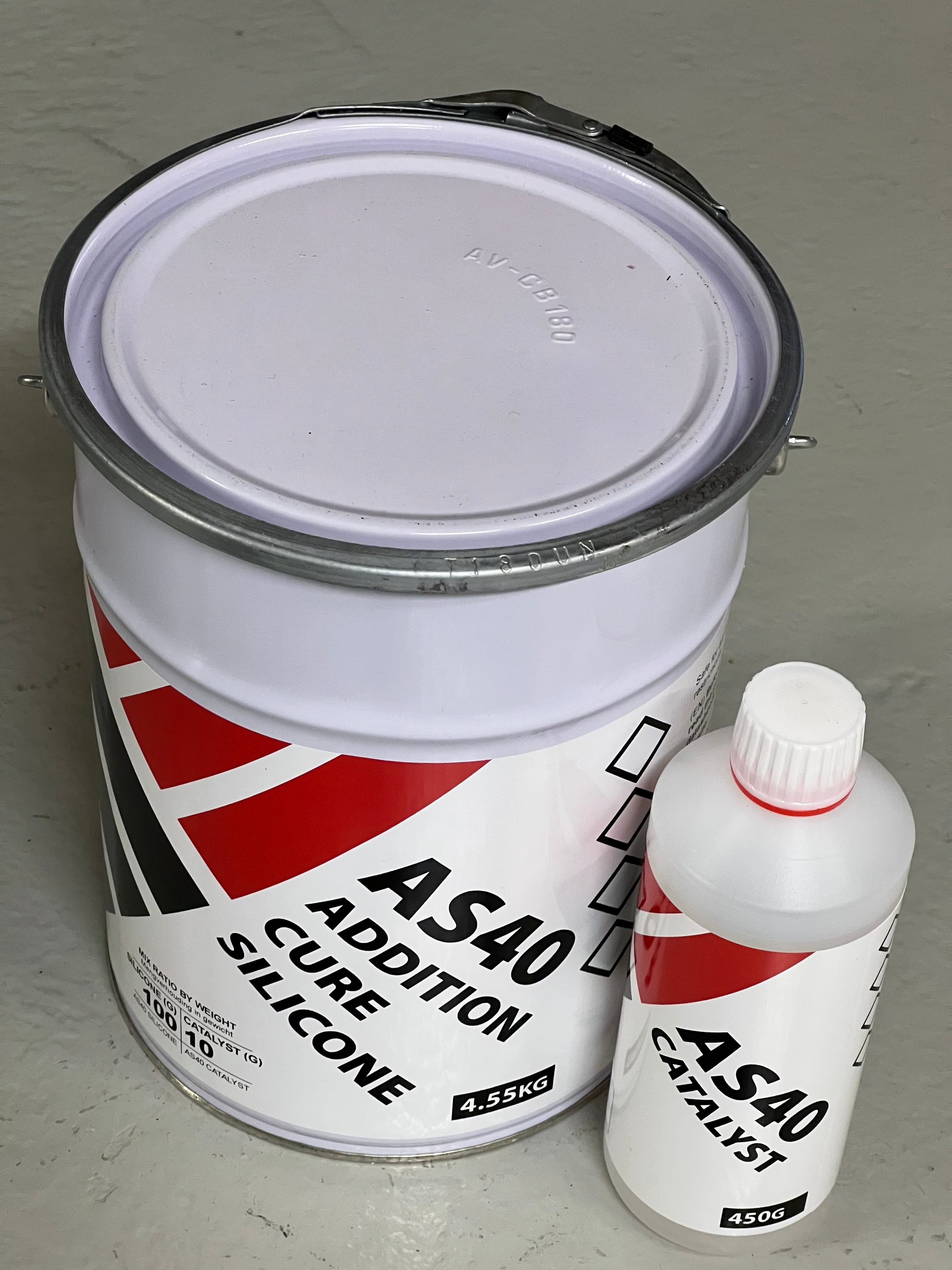
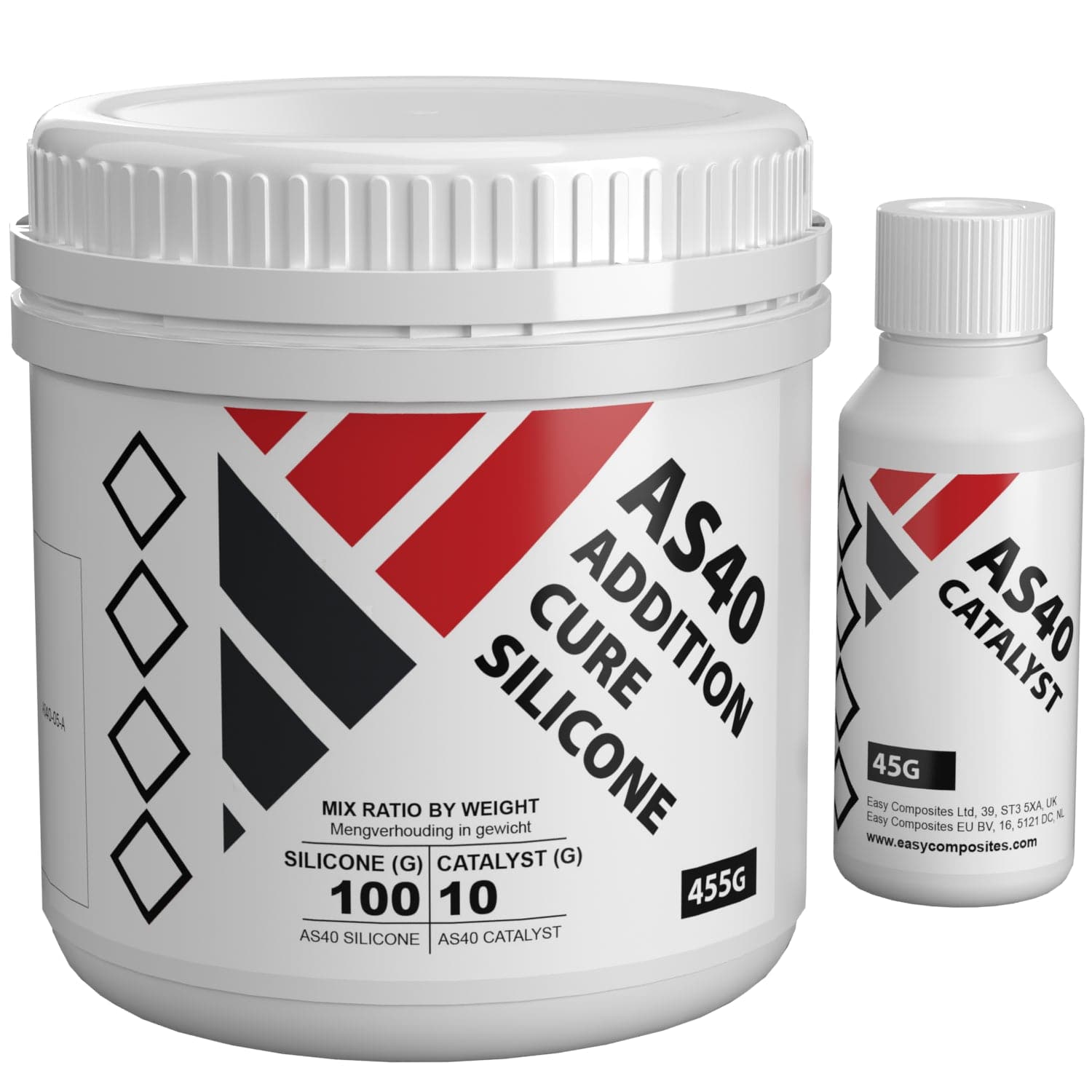
AS40 Silicone Rubber is a 2-component molding compound used for making casts of other objects. This compound provides a highly accurate cast/reproduction of the object being molded.
High durability
Cured AS40 Silicone Rubber is durable, shrinks very little, has high tear strength, and can often be used for many castings. It is resistant to styrene.
Transparent and can be colored
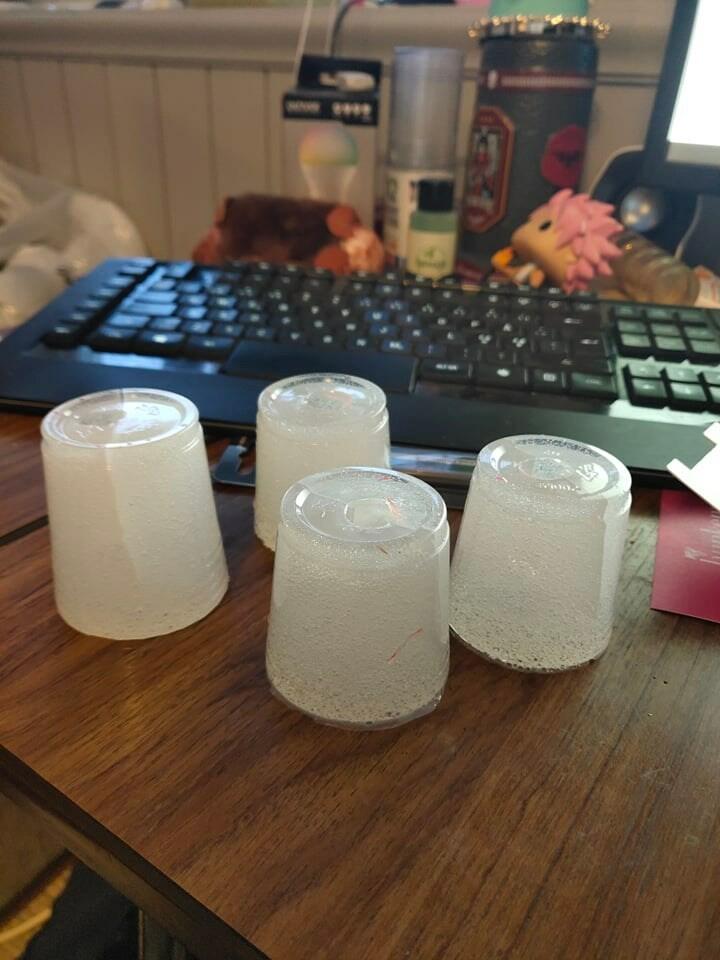
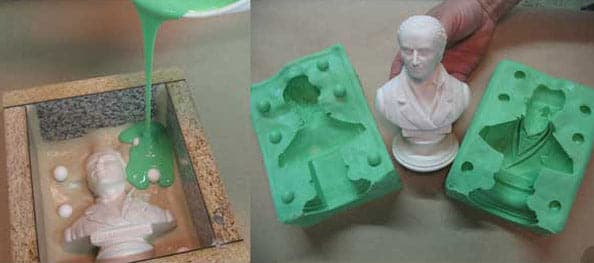
The silicone has excellent transparency; it can be cast completely clear or can be colored with our epoxy powder dyes. The example images have been colored or are simply examples of what can be made.
Do you need a vacuum or pressure chamber?
AS40 has a relatively high viscosity, making it slightly harder to mix and more prone to retaining air bubbles than, for example, our CS25 molding silicone. It is possible to use AS40 without vacuum or pressure, but you will achieve an easier and better result if you can remove bubbles using a vacuum or cure the mold under pressure. If you do not have access to such equipment, we recommend checking out our CS25 molding silicone, which is very beginner-friendly, although it is not as hard and not as transparent as AS40.
Mixing ratio and curing times
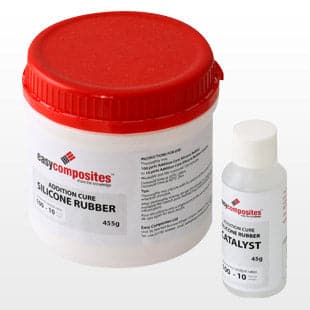
100 parts by weight base (Addition Cure Silicone Rubber)
10 parts by weight hardener (Catalyst)
Density: 1.08 g/cm³ at 20°C
Pot life after mixing base and hardener: Approx. 30 minutes at 20°C
Curing time at 20°C: Approx. 24 hours.
Curing time at 60°C: Approx. 2 hours.
Curing time at 70°C: Approx. 1 hour.
Curing time at 80°C: Approx. 30 minutes
The molding compound cures down to 10°C, but the curing time will be longer at lower temperatures.
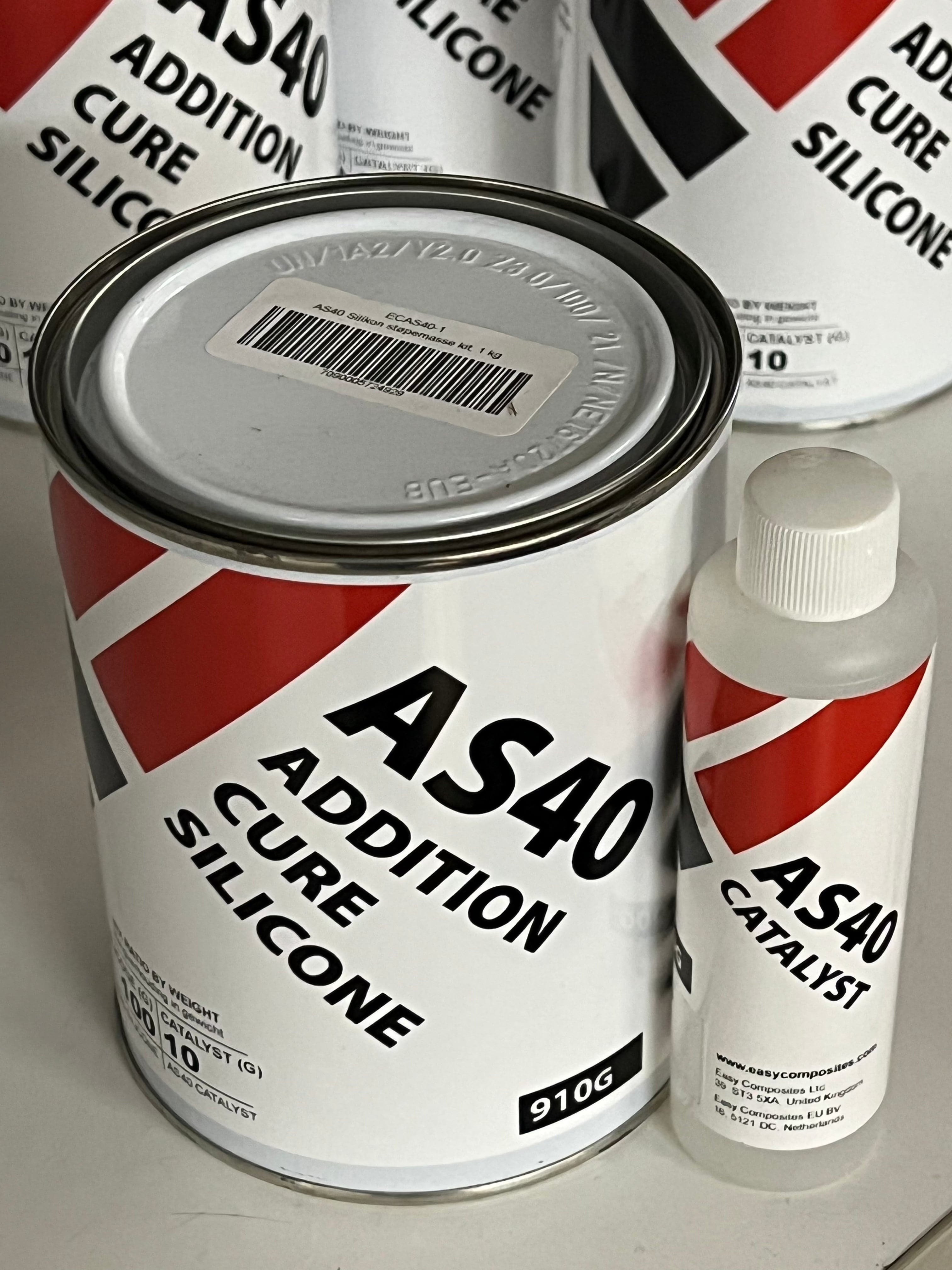
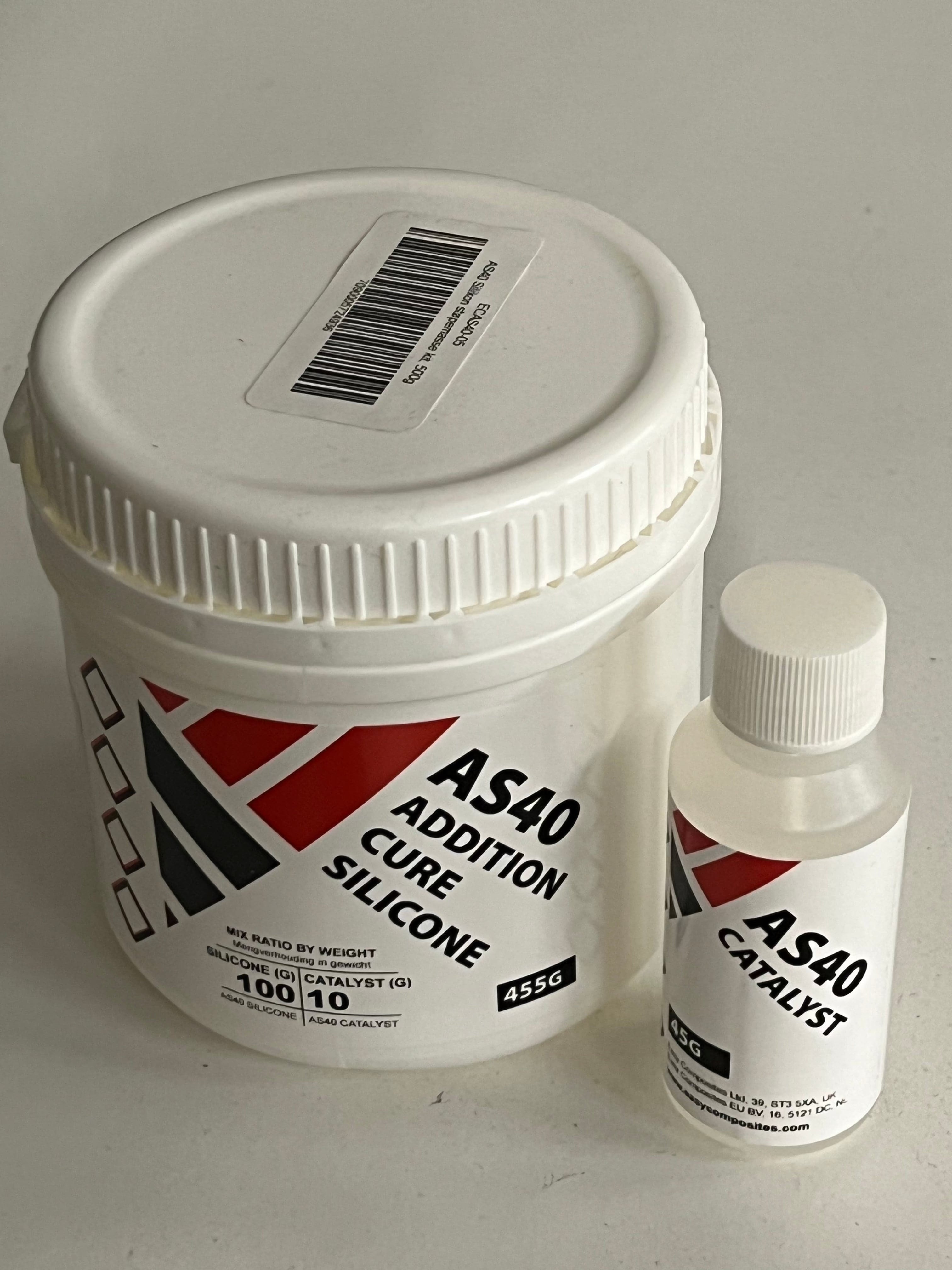
This molding compound consists of two components (base and hardener), and the package is supplied with the correct amount of each component. Base and hardener must be mixed in the correct ratio for the molding compound to cure.
Instructions for use
- Find an empty container or box to be used for the molding work.
- Place the object to be molded/reproduced into the box. You may want to glue it to the bottom of the box so it does not move when you pour the molding compound.
- Shake the bottle of hardener before mixing it with the base.
- Use a mixing cup, a syringe with measurements, or a scale to measure the correct amount of base and hardener.
- Mix well but carefully to avoid "whipping" air into the mixture when combining the two components.
- Scrape the sides and bottom of the mixing cup to ensure that the hardener and base are thoroughly blended.
- Then pour the mixed molding compound over the object in the box. Pour carefully and in a thin stream. Let the molding compound flow over and cover the object in the box.
- If air bubbles appear on the surface of the molding compound, you can pop them with a toothpick. If you have a vacuum chamber, it can also be used to remove air bubbles from the molding compound.
- Let the molding compound cure for 24 hours at 20°C. If you increase the temperature, the curing process will be faster.
- Once the molding compound has cured, remove the container or box from the cured mold.
- Then detach the mold from the object you have cast. If necessary, use a utility knife to assist.
- If you have used a utility knife to slice the cured mold to release it from the original object, you can tape the mold back together before filling it with epoxy to make a new reproduction.
Thickening agent
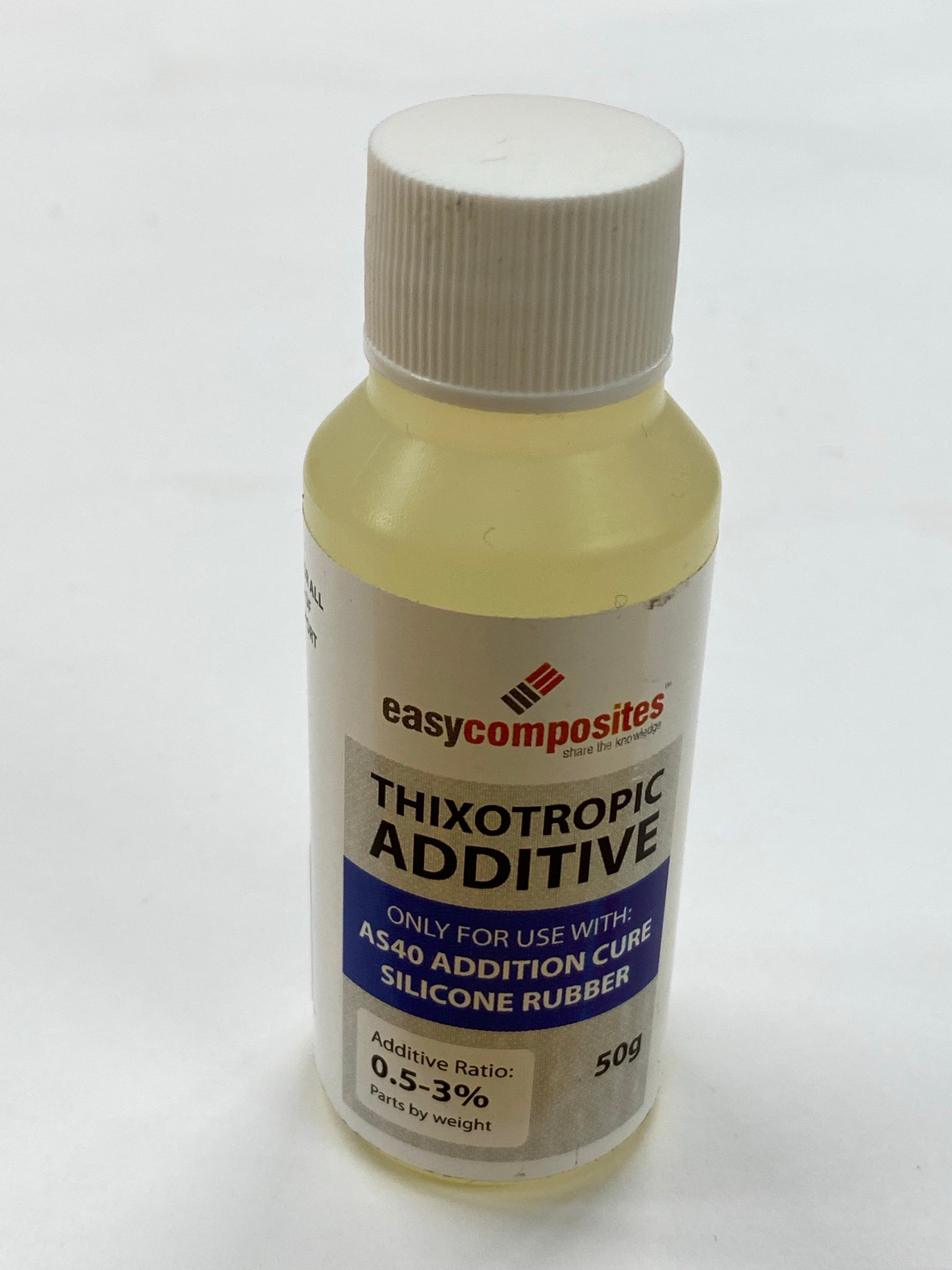
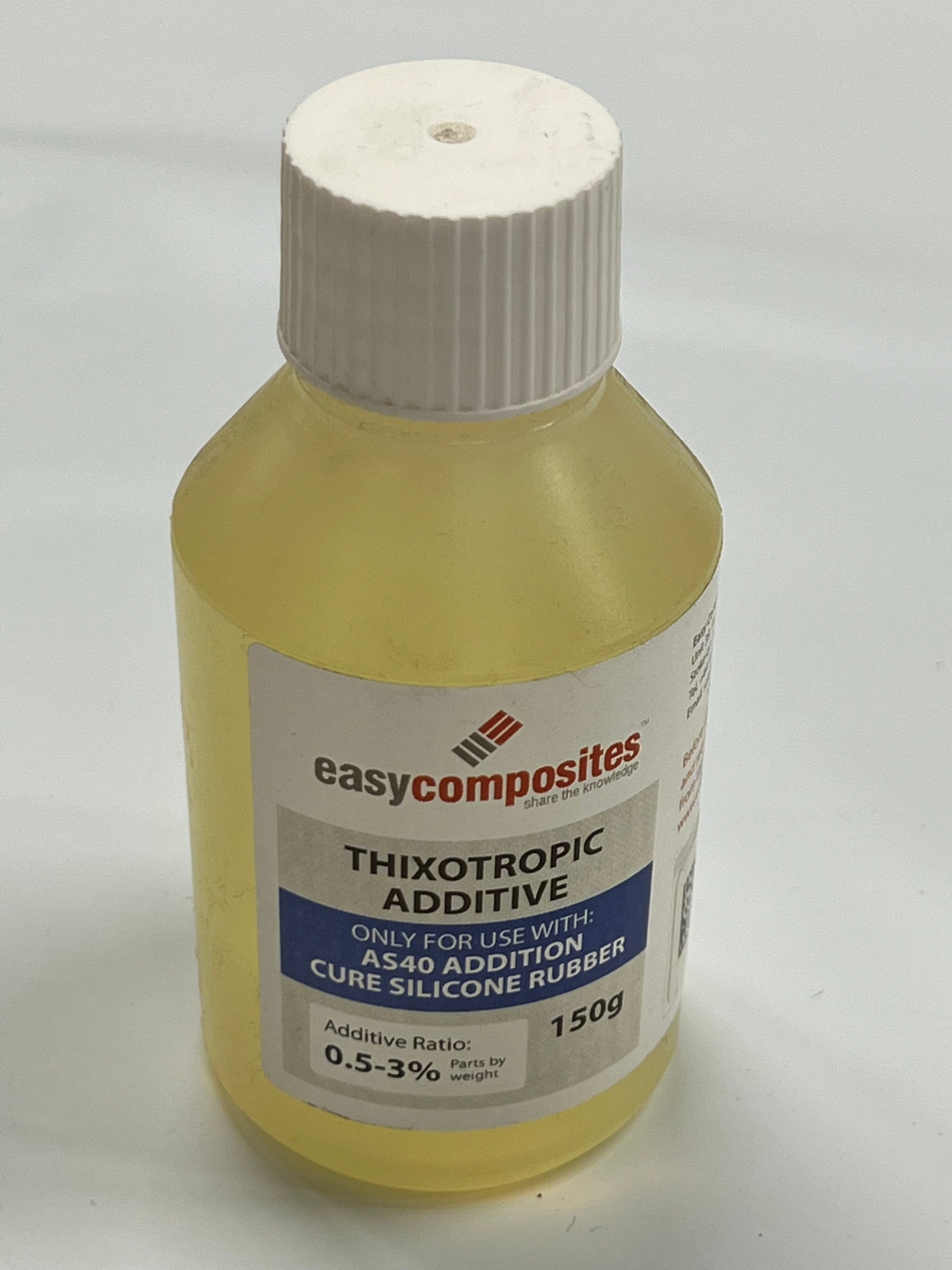
Mix in 1-3% thickening agent into the silicone to make it thicker for application onto sculptures and vertical surfaces. A 50g bottle can treat up to 5kg of silicone, or slightly less if you want it more viscous.
Always perform a test
AS40 Silicone Rubber can be used to make molds of most types of objects in plastic, metal, wood, etc. Remember, some objects must be coated with wax before pouring the molding compound so that it will release from the object after curing.
We always recommend performing a test before starting important work so that you become confident in how the materials perform.
AS40 silicone molding compound is almost odorless.
Wear gloves and safety goggles and ensure you work under the conditions specified in the safety data sheet.