


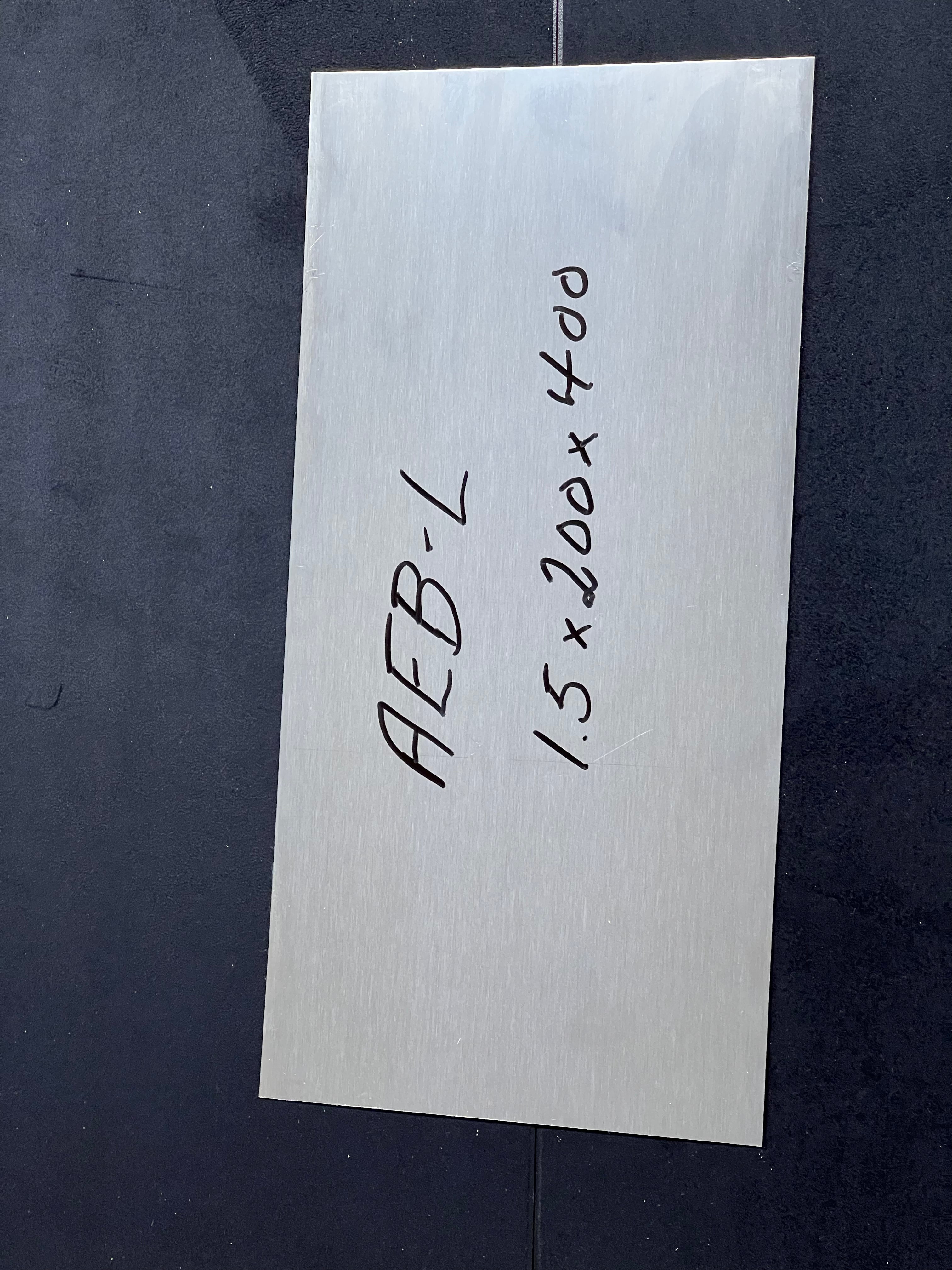
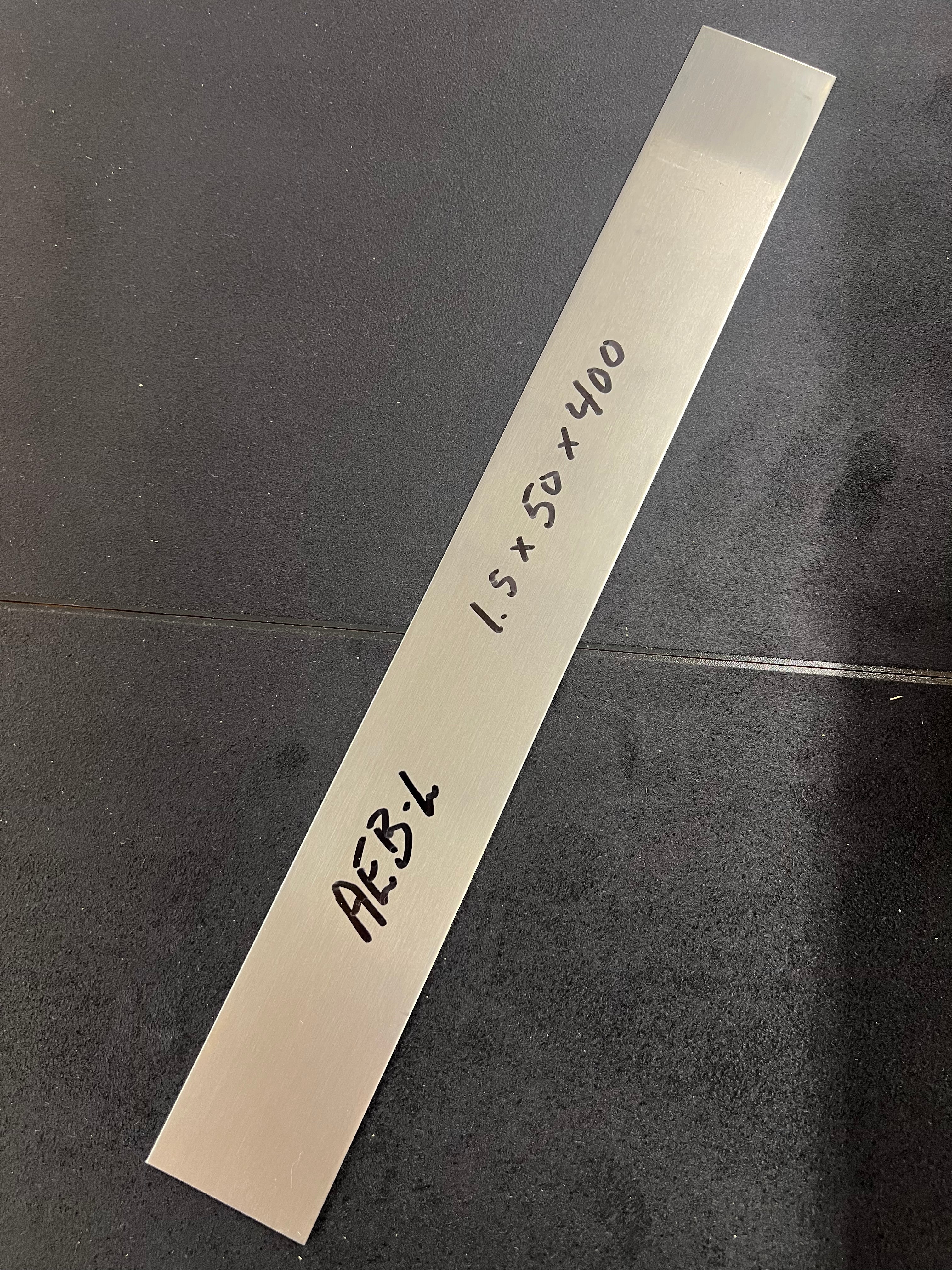
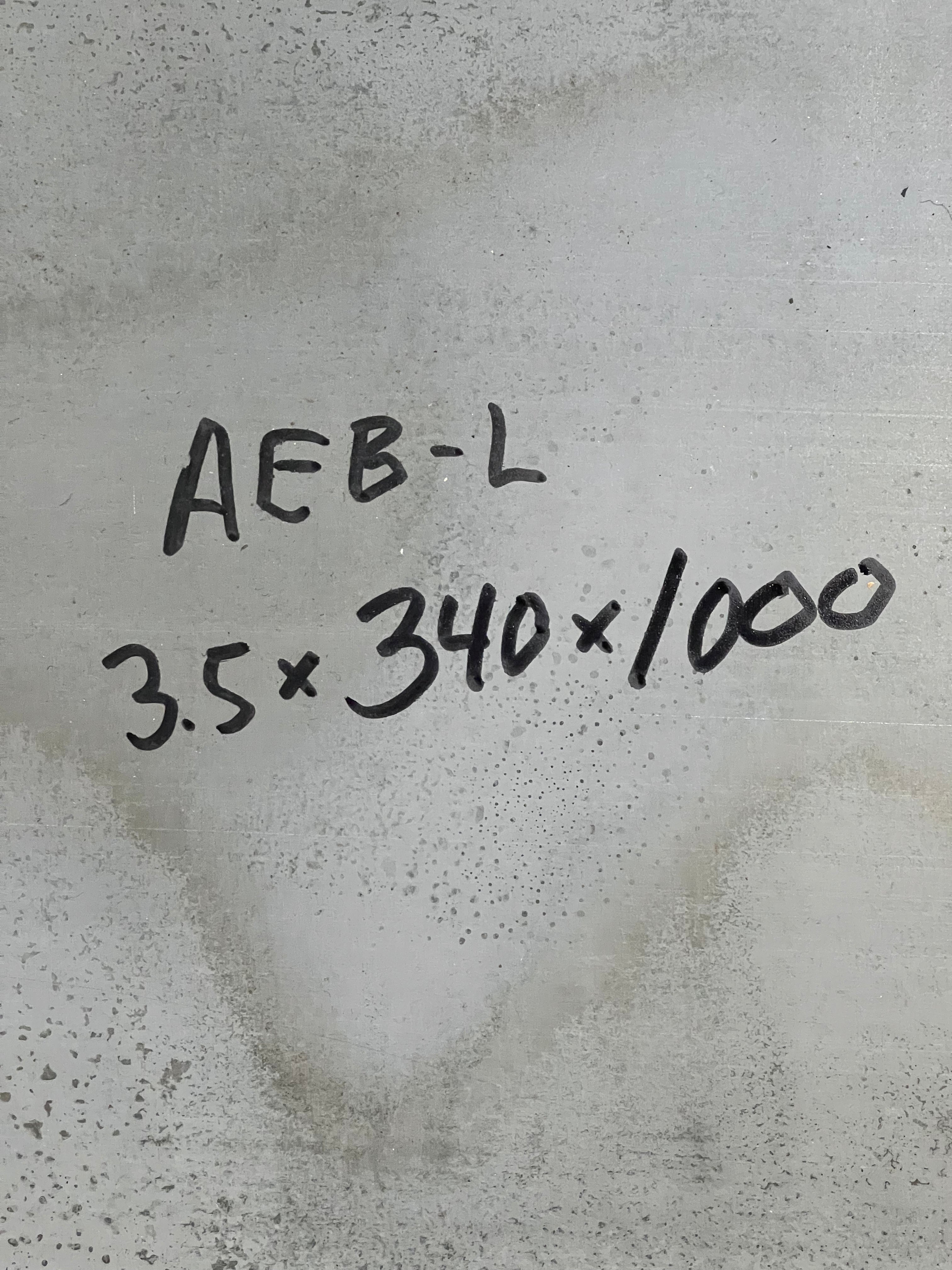
AEB-L Stainless knife steel
Tax included.

Create something real with your own hands
Thousands of satisfied customers
Fast delivery
(1-3 days)
Natural, creative and timeless
Product type - Knife steel
Tool type - Stainless martensitic knife steel
Usage -
Experience level - Intermediate to experienced
Contains - 1 pc AEB-L / SF100 in selected dimension
Material:
We ship almost all orders on the same business day if you order before 2:00 PM.
Standard delivery time: 1–3 business days with Bring.
Customers in Northern Norway may experience an extra day or two in some cases.
Tracking:
You will receive a tracking number via email as soon as the package has been shipped.
100% satisfaction guarantee:
We are completely confident that you will be satisfied. We are so confident that we offer both full returns and coverage of return shipping. No matter what. This means there is absolutely no risk for you to order now to inspect the product yourself in your own home and at your own pace.
We also stock spare parts and wear parts, so if you should be unfortunate enough to break something or, against all odds, manage to wear out the sharpening stones, these can be easily replaced.
Easy returns:
Contact our customer service, and we will send you a pre-filled return label.
No questions asked – no risk
Leatherworking is a traditional hobby that combines creativity, craftsmanship, and functionality. Through working with leather, you can create everything from knife sheaths, belts, and wallets to bags, bracelets, and decorative items. Many appreciate leathercraft because it provides the opportunity to make unique products that both look great and can be used for many years.
One of the great advantages of leatherworking is that you can start simply and develop your skills over time. With basic tools and materials, you can learn techniques such as cutting, stitching, shaping, embossing, and dyeing. As your experience grows, more and more opportunities open up for advanced projects and personalized designs.
Leather is a living natural material that develops character and patina through use. This makes every project unique and adds an extra dimension to the craft. Many also find leatherworking to be a relaxing and rewarding activity, where a focus on details and craftsmanship offers a break from a hectic everyday life.
Whether you want to make practical products for your own use, personalized gifts, or traditional crafts like knife sheaths and hiking gear, leatherworking is a hobby that combines the joy of creation, quality, and pride in craftsmanship. It is an activity that suits both beginners and experienced crafters alike, and it provides great satisfaction as the raw material is gradually shaped into a finished product with your own hands.
Description:
Here you have the well-known stainless steel AEB-L, which is just as suitable for the kitchen as it is in the woods. The steel is of super high quality, without having the price of the best “super steels” made using more expensive processes.
It can be hardened at 1040 degrees with cooling to room temperature, 1060 degrees with cooling in a freezer, or 1080 with deep-freezing using liquid nitrogen or dry ice. Such a higher temperature, combined with deep-freezing, can provide 1-2 HRC higher hardness, but performance will still be good without it, as long as the hardening temperature (austenitizing temperature) is reduced as mentioned. In any case, we recommend cooling the knife blade in the freezer after it has cooled to room temperature.
We recommend everyone to experiment with hardening knife steel to get to know it.
What is the difference between AEB-L and SF100?
Both of these are names for the same type of steel, but SF100 is produced in the UK. Currently, the sheets are in 3mm SF100.
PS: Slightly curved 5-12mm means this is the height from the table to the highest part of the sheet, in the middle, when you place it on a flat table. It has little or nothing to do with making knives, and the minimal curve that exists over a knife span (e.g., 25cm) is very small and straightens out when you harden the blade or grind it. The other sheets are completely flat, so here you can choose freely whether you want to save a few crowns on a sheet that has a slight bend or have one that is 100% flat.
Why deep-freeze stainless steel after hardening?
When hardening stainless steels like AEB-L, it can be an advantage to put the blade in the freezer after cooling in oil. For AEB-L, a small increase in hardening temperature, and a trip to the freezer after the quench, could lead to an increase of 1-1.5 points on the Rockwell hardness scale (HRC). See the graph showing the difference between room temperature, liquid nitrogen/dry ice, and the freezer: https://i0.wp.com/knifesteelnerds.com/wp-content/uploads/2019/02/hardness-AEB-L2.jpg?w=752&ssl=1
